True Digital Park, Bangkok

XJTLU Syntegrative Education Centre

China's largest Sino-foreign university, awarding University of Liverpool degrees, now in Bangkok with CP Group. Solve live business challenges or build your own startup, on courses mapped to our flagship master's in China and eligible for credit towards it.

  • Taught by XJTLU professors and CP Group leaders
  • Priority access to CP Group internships
  • Joint XJTLU and CP Group certificates
  • Startup ecosystems in Thailand and China
{{cs.alt}}
{{heroLabel}}
ISC001

Registration is open for ISC001 Startup & Industry Lab. 21 November to 13 December 2026 at True Digital Park, Bangkok. Registration closes on 15 November 2026.

Register for ISC001 (opens CP Group registration in a new tab)

Our programmes

Choose your Startup & Industry Lab

Two Integrated Short Courses built around real business challenges. Each is complete on its own: take either first, or both.

Compare the courses
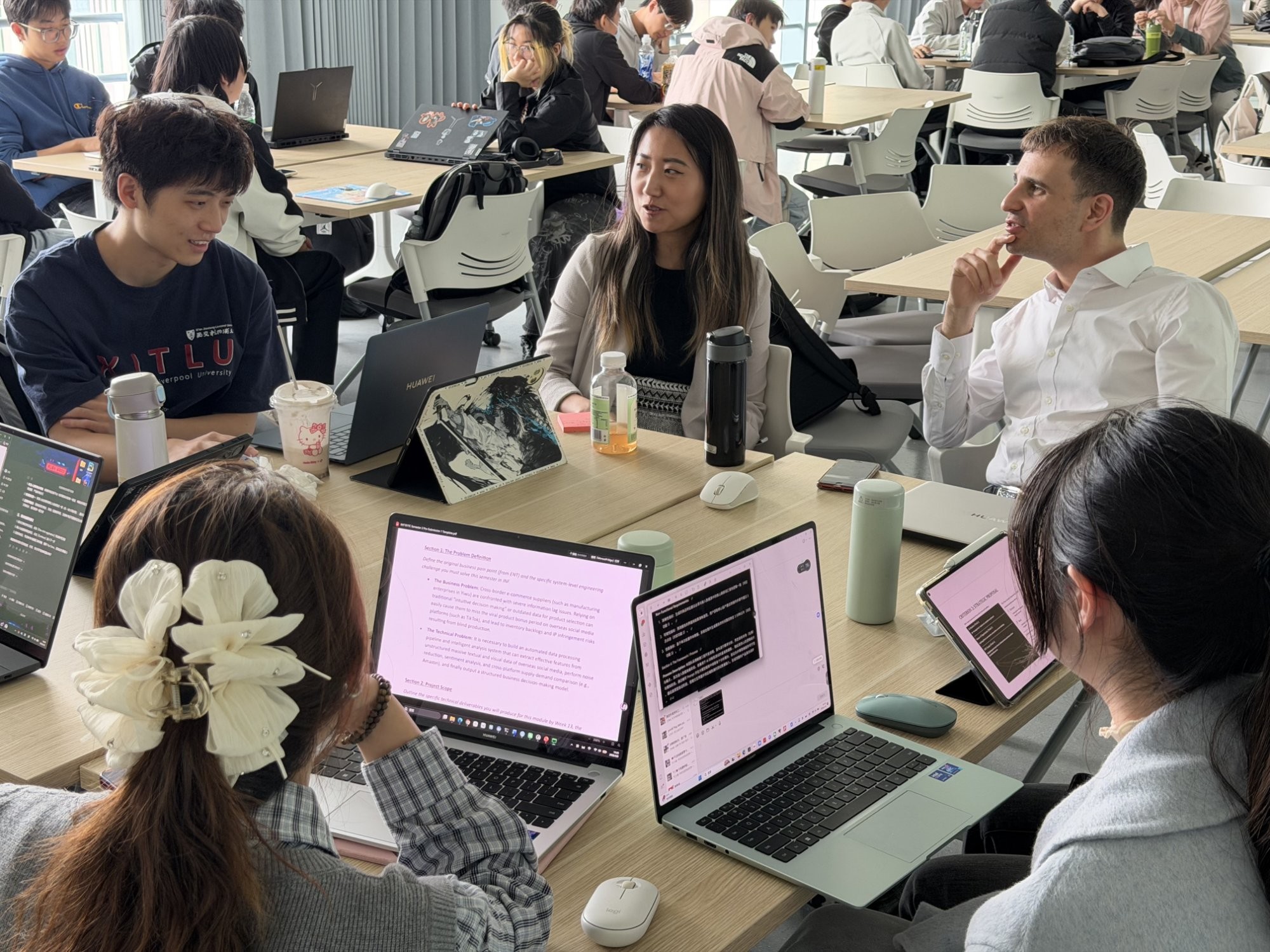
Pietro Borsano discussing a project with XJTLU students around a table of laptops
ISC001

Startup & Industry Lab

Develop and test a solution to a real business challenge in Thailand.

Location
Bangkok, Thailand
Teaching days
Two weekends (21–22 November and 12–13 December) and two Wednesday evenings (25 November and 9 December)
Taught by
XJTLU professors and CP Group leaders
Commitment
40 contact hours; 150 hours in total
Next run
21 November to 13 December 2026
Fee
THB 50,000 plus 7% VAT
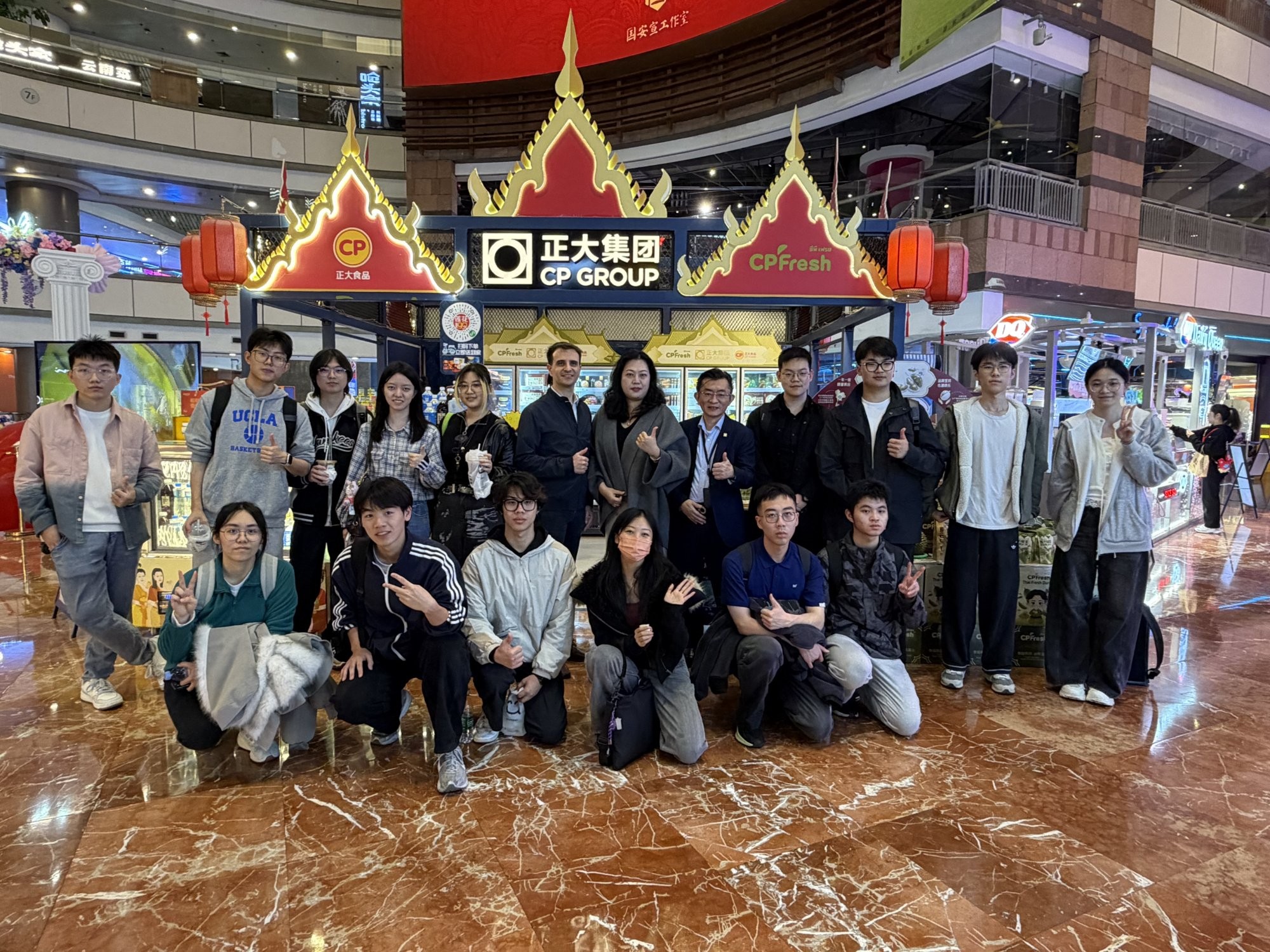
Pietro Borsano with students in front of the CP Group stand at Super Brand Mall, Shanghai
ISC002

Startup & Industry Lab across Asia

Test and adapt a project across Thailand and Greater China, including an immersion week in Greater China.

Locations
Bangkok and Greater China, including Taicang
Delivery
Bangkok opening weekend, two-week fieldwork interval, Monday to Saturday in Greater China
Commitment
48 contact hours; 150 hours in total
Next intake
Dates to be announced (end of 2026)
Fee
THB 80,000 plus 7% VAT, including accommodation and local transportation in Greater China
View ISC002

ISC001 is not a prerequisite for ISC002. You can bring your own project or join with a supplied brief.

Syntegrative Education

Industry, technology and an entrepreneurial mindset, brought together

We bring together an understanding of industry, knowledge of relevant technologies and an entrepreneurial mindset. Learners investigate problems, test ideas and use evidence to improve their decisions, supported by faculty and industry mentors known as Pathfinders.

Read about our approach
Industry perspective, technology domain knowledge and an entrepreneurial mindset overlap in Syntegrative Education Industry perspective Technology domain knowledge Entrepreneurial mindset XSEC
Lifelong learningContinue learning throughout your life
Confidence with ambiguityBecome more comfortable working with ambiguity
Your interests and strengthsDevelop a direction that reflects your own strengths and interests
Associate Professor Pietro Borsano, Director

Welcome from the Director

“At XSEC, we organise learning around real business problems. Through our integrated short courses (ISC) and executive education, you investigate a challenge, identify what you need to understand and draw on relevant knowledge to develop a response.”

Associate Professor Pietro BorsanoDirector, XJTLU Syntegrative Education Centre, Thailand

Read the full welcome

Contact

Visit or contact the Centre

  • XJTLU Syntegrative Education Centre
    True Digital Park, West Building
    Second floor, Podcast Room #2
    Bangkok, Thailand (BTS Punnawithi)
  • Programme enquiries: {{enquiryEmail}} Programme enquiries: To confirm Centre enquiry email

Contact details and directions

Ready to register?

Registration via CP Group is for the Centre's own programmes only, ISC001 and ISC002. You will continue to CP's registration page.

XSE, XJTLU × CP Group

About the Centre

Connecting learners with real business challenges in Bangkok, through XJTLU's Syntegrative Education approach.

Our Centre

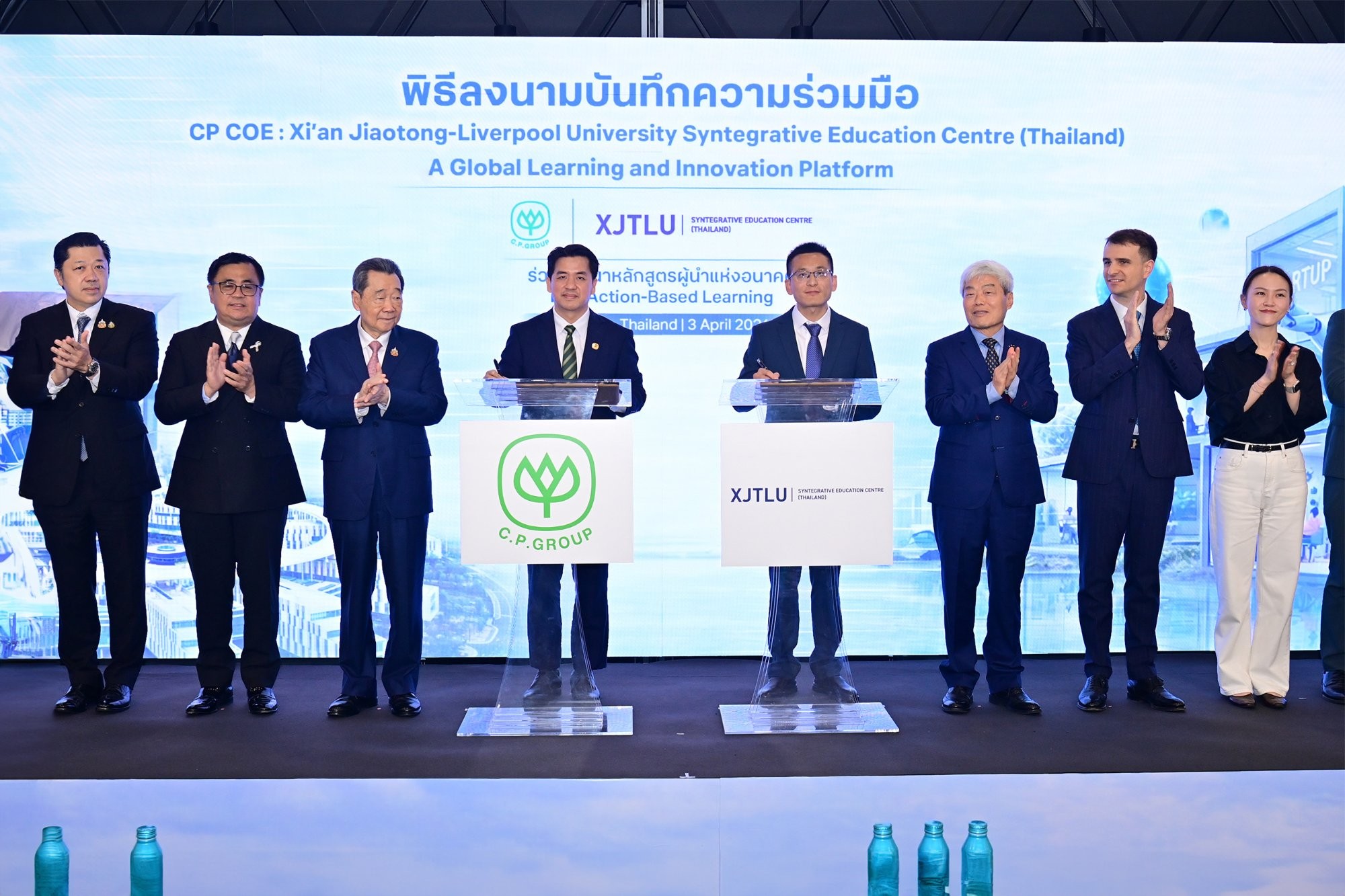
The XJTLU Syntegrative Education Centre in Bangkok was established by Xi'an Jiaotong-Liverpool University in partnership with CP Group. Based at True Digital Park, the Centre connects learners with real business challenges through XJTLU's Syntegrative Education approach.

We bring together an understanding of industry, knowledge of relevant technologies and an entrepreneurial mindset. Learners investigate problems, test ideas and use evidence to improve their decisions, supported by faculty and industry mentors known as Pathfinders.

Our vision is to support lifelong learning, confidence when working with ambiguity, and the development of each learner's interests and strengths. Our provision spans executive education, short courses for high school students (grades 10–12), undergraduate and master's students, and courses for young professionals. Teaching is delivered in English.

Where the model comes from

Proven at XJTLU, now in Thailand

Xi'an Jiaotong-Liverpool University (XJTLU) was established in 2006 by Xi'an Jiaotong University in China and the University of Liverpool in the UK. In 2018, XJTLU agreed to establish the XJTLU Entrepreneur College (XEC), the home of Syntegrative Education. The College moved to XJTLU's new Taicang campus, near Shanghai, when it launched in 2022. Each of its schools is run with an industry partner, so students learn through company challenges from their first year. In 2026 the model came to Bangkok: the Centre is part of XEC, and CP Group is its partner in Thailand.

The results show in where graduates go next. XEC graduates have continued their studies at Columbia, Johns Hopkins, the University of Pennsylvania, Cornell and Boston University in the United States, and at Imperial College London, UCL, the National University of Singapore and the University of Hong Kong.

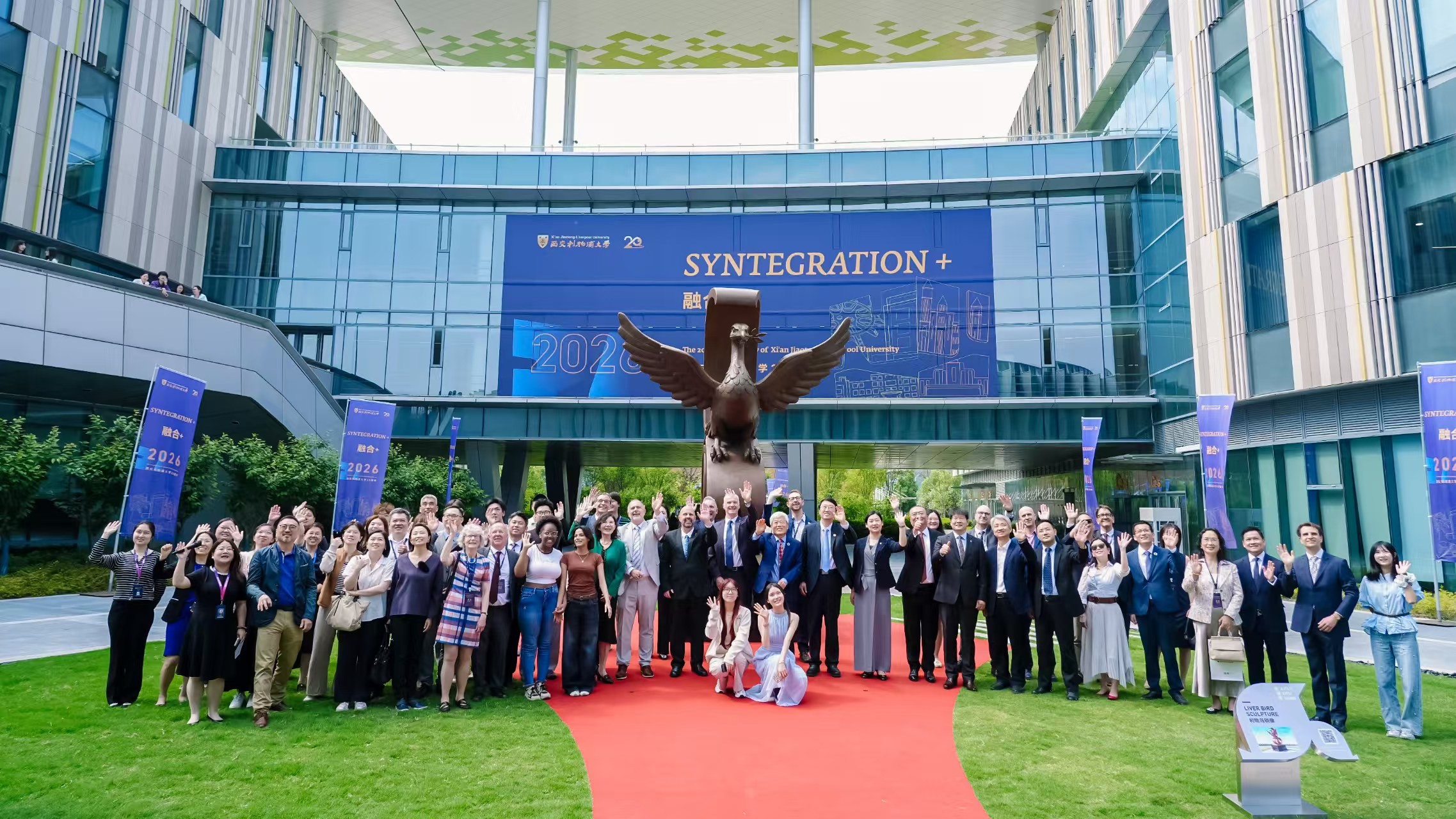
XJTLU and University of Liverpool leaders in front of the Liver Bird sculpture at the XJTLU Entrepreneur College, Taicang, under a Syntegration+ 2026 banner
XJTLU's 20th anniversary: leaders from the University of Liverpool visit the XJTLU Entrepreneur College in Taicang, May 2026
94.7%of XEC Robotics graduates received offers from global top-100 universities
86%of all XJTLU 2025 graduates planned further study at leading universities
  1. 2006XJTLU is officially established
  2. 2018Agreement for the establishment of the new Entrepreneur College
  3. 2022XJTLU Taicang campus launched, home of the Entrepreneur College
  4. 2026The model comes to Bangkok, with CP Group

The Centre brings this model to Thailand with strong support from CP Group, placing companies inside XJTLU's teaching:

  1. CP Group companies bring live business challenges into the courses.
  2. CP leaders teach and coach alongside XJTLU faculty.
  3. Learners in Thailand join XJTLU's network, including the Taicang campus through ISC002.

Our educational approach

Three kinds of understanding, applied to real problems

01

Industry perspective

Understand how industries have developed over time, how they operate and the changes shaping their future.

02

Technology domain knowledge

Understand relevant technologies, their applications and limitations, and their implications for business.

03

Entrepreneurial mindset

Recognise opportunities, test assumptions and take initiative to create value in new ventures and existing organisations.

Syntegrative Education, explained by our students

Our Thai MSc students made this short video to explain the Syntegrative Education model at the XJTLU Entrepreneur College (XEC) in their own words.

Language: Thai

Associate Professor Pietro Borsano, Director

Welcome

Welcome from the Director

Welcome to the XJTLU Syntegrative Education Centre in Bangkok (XSEC)!

At XSEC, we organise learning around real business problems. Through our integrated short courses (ISC) and executive education, you investigate a challenge, identify what you need to understand and draw on relevant knowledge to develop a response. Our Syntegrative Education approach connects how industries have developed with the technologies shaping them and the entrepreneurial judgement needed to create value. Learning to identify and fill gaps in your own understanding is a habit we hope you will carry well beyond the course.

Working with companies also means making decisions despite uncertainty and ambiguity. You will speak with people affected by a problem, test possible solutions and reconsider your assumptions when the findings challenge them. Faculty and industry mentors will question your reasoning and help you decide what to investigate next. This is how we help you become more comfortable working with ambiguity.

There should also be room for your own interests and ambitions. A project may help you develop a venture or contribute to your family business. Through the responsibilities you take on, you can discover where your strengths lie and what you want to develop further. Reflection on that experience is an important part of the learning.

Cross-cultural understanding matters throughout this process. Working across Asian markets requires you to examine how local relationships, institutions and customer expectations shape a business. We encourage you to investigate those differences directly and consider how they change your proposed solution.

My commitment to this approach is personal. My upbringing in Italy placed considerable emphasis on theoretical knowledge, and it motivated me to seek a more practical direction in education. Management courses in Europe and the United States, my consulting work, and more than a decade across Southeast Asia, Hong Kong and mainland China strengthened that conviction. It is why I have brought company projects into my teaching and involved students in working with businesses early in their studies.

I look forward to welcoming you, hearing your questions and supporting the work you choose to pursue.

Associate Professor Pietro BorsanoDirector
XJTLU Syntegrative Education Centre, Thailand

People

Our team

Associate Professor Pietro Borsano, Director

Associate Professor Pietro Borsano

Director, XJTLU Syntegrative Education Centre, Thailand

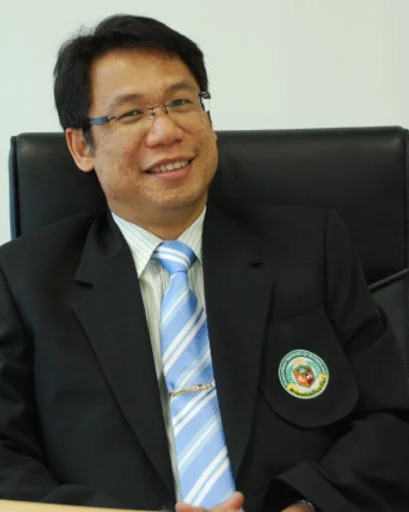
Pietro Borsano is an Associate Professor in Entrepreneurship at Xi'an Jiaotong-Liverpool University and Director of the Centre in Bangkok. His work brings together entrepreneurship education, industry partnerships and venture development across Asia. He previously served as Deputy Executive Director of Chulalongkorn University's School of Integrated Innovation. His research focuses on digital transformation and entrepreneurship in family businesses.

Kathryn Xi, Administrative Manager

Kathryn Xi

Administrative Manager

Kathryn Xi handles the Centre's administration and programme enquiries. Before joining the Centre, she worked at XJTLU from 2021 in student experience and administration, organising academic events. She studied at XJTLU and at the University of the Fraser Valley in Canada, where she was a research assistant. She previously worked in media and communication.

Explore academic staff at XJTLU’s Entrepreneurship and Enterprise Hub (opens in a new tab)

CP Group and PIM

Associate Professor Dr Ruengsak Kawtummachai, Vice President, CP Group

Associate Professor Dr Ruengsak Kawtummachai

Vice President, CP Group

Ruengsak Kawtummachai is Vice President of CP Group, where he helps run the CP Group Scholarship Programme and sits on the panels that interview and select scholarship students. He is also an academic in business administration at the Panyapiwat Institute of Management, with research on green supply chains and retail management.

Pimolmas Netramai, Lecturer, Panyapiwat Institute of Management

Pimolmas Netramai

Lecturer, Panyapiwat Institute of Management

Pimolmas Netramai has been a lecturer at the Panyapiwat Institute of Management since 2009. She graduated from the University of Queensland in Australia.

The Centre

XSE, XJTLU × CP Group

Programmes

Integrated Short Courses delivered by the Centre, and programmes the Centre has supported for industry partners.

Our programmes

Integrated Short Courses

ISC001 is about building something people want in one market. ISC002 is about whether it can win the next one. Each course is complete on its own, either may be taken first, and neither is a prerequisite for the other.

ISC001

Startup & Industry Lab

Develop and test a solution to a real business challenge in Thailand.

Location
Bangkok, Thailand
Delivery
Two teaching weekends, two Wednesday evenings and two fieldwork weekends
Taught by
Professors from Xi'an Jiaotong-Liverpool University (XJTLU) and CP Group leaders
Commitment
40 contact hours; 150 hours in total
Next run
21 November to 13 December 2026
Fee
THB 50,000 plus 7% VAT
ISC002

Startup & Industry Lab across Asia

Test and adapt a project across Thailand and Greater China, including an immersion week in Greater China.

Locations
Bangkok and Greater China, including Taicang
Delivery
Bangkok opening weekend, two-week fieldwork interval, Monday to Saturday in Greater China
Commitment
48 contact hours; 150 hours in total
Fee
THB 80,000 plus 7% VAT, including accommodation and local transportation in Greater China
Next intake
Dates to be announced (end of 2026)
View ISC002

Which course suits you?

Comparison of ISC001 and ISC002
FeatureISC001 Startup & Industry LabISC002 Startup & Industry Lab across Asia
The challengeBuild something people want. Talk to the people who have the problem, put a rough prototype in front of them early, and back your pilot with what they told and showed you.Win the next market. Take a project into Greater China, test what still holds when customers, partners and costs change, and decide what to keep, adapt or drop.
Designed forFourth-year college students, master's students and early-career professionalsCollege and university students, master's students and professionals
WhereBangkok, ThailandBangkok and Greater China, including Taicang
Teaching patternTwo weekends (21–22 November and 12–13 December) and two Wednesday evenings (25 November and 9 December), with two self-paced fieldwork weekends in betweenBangkok opening weekend, two-week interval for evidence collection in Thailand, then Monday to Saturday in Greater China
Learning commitment40 contact hours; 150 hours in total48 contact hours; 150 hours in total
CertificateCertificate of completion, jointly issued by XJTLU and CP GroupCertificate of completion, jointly issued by XJTLU and CP Group
FeeTHB 50,000 plus 7% VAT; includes course materials, refreshments and weekend lunch boxesTHB 80,000 plus 7% VAT, including accommodation and local transportation in Greater China
Next run21 November to 13 December 2026; registration closes 15 November 2026Dates to be announced (end of 2026)
ProjectsYour own student startup, an XJTLU startup exploring ASEAN markets, or a brief from another startup or industry partner, including CP GroupBring a project from your venture, employer or previous study, or join with a pre-scoped partner brief
Final submissionApproximately four weeks after Demo DayApproximately four weeks after Demo Day
PrerequisiteNoneNone. ISC001 is not required.

Programmes supported

Working with industry

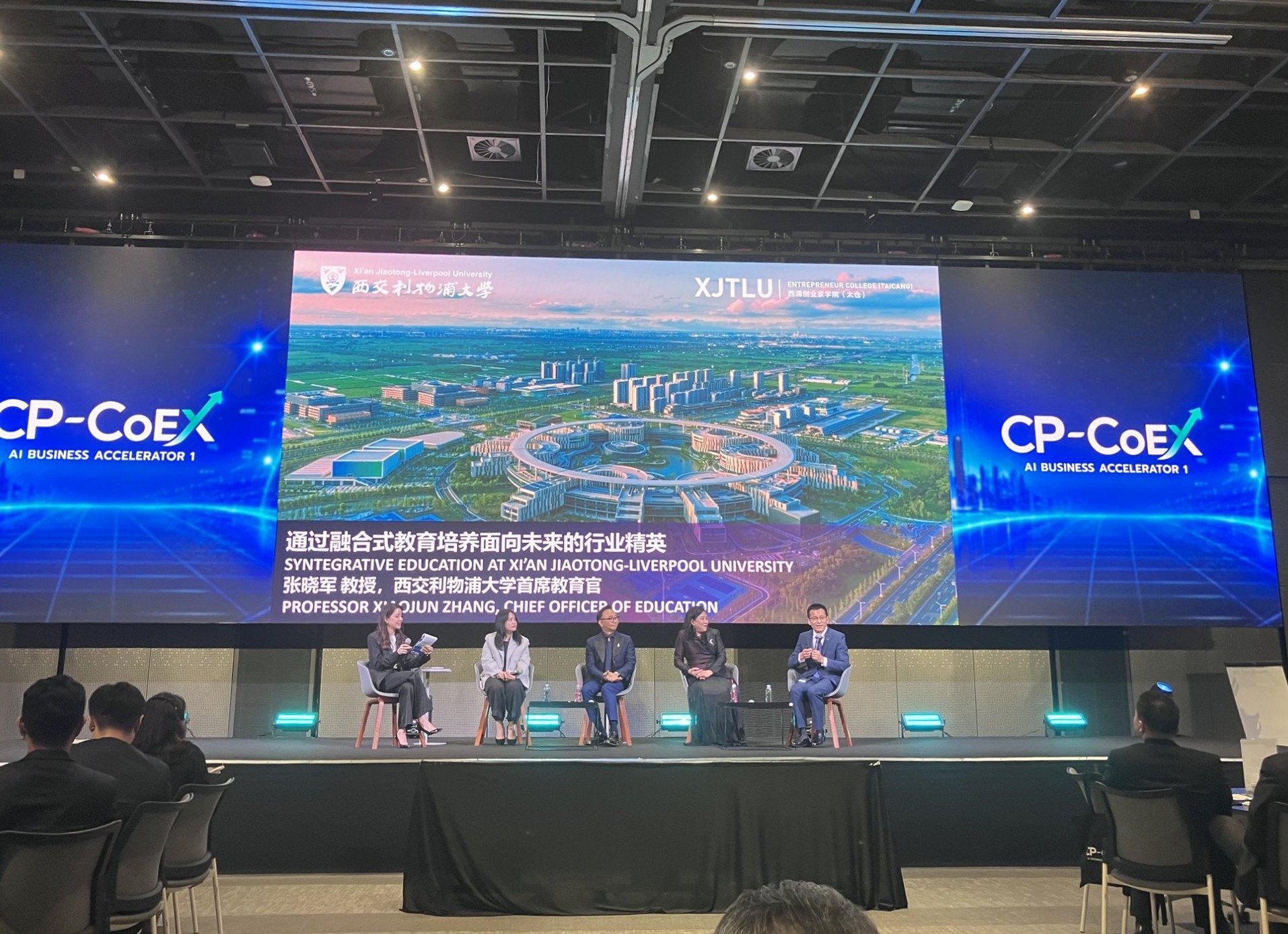
Panel discussion on stage at the CP-CoEX AI Business Accelerator, with a slide on Syntegrative Education at XJTLU
Programme supported for CP Group

CP-CoEX AI Business Accelerator

The Centre is a supporting partner of the CP-CoEX AI Business Accelerator, launched by the CP Innovation Center of Excellence in August 2026: a 12-week programme in which 60 participants from 11 companies develop seven AI projects on real business challenges. XJTLU curated the teaching blocks in the first five weeks, with sessions on AI and analytics in business and on systems thinking.

Read the news story
XSE, XJTLU × CP Group ISC001

Startup & Industry Lab

Developing and testing solutions to real business challenges.

Pietro Borsano discussing a project with XJTLU students around a table of laptops

Why join ISC001

  1. Joint XJTLU + CP Group certificateCo-signed by a university and by industry.
  2. Learn from senior executivesLeaders and graduates of Stanford, UCLA and ESCP.
  3. Fast lane to the Dream‑Chasers finalTop 3 teams go straight to the final. THB 1.5 million prize pool.
  4. Priority access to CP Group internshipsFor every ISC student.
  5. Head start on a University of Liverpool master'sMapped to the University of Liverpool MSc curriculum.
Dates
21 Nov – 13 Dec 2026Registration closes 15 November
Teaching days
2 weekends + 2 Wednesday eveningsWeekends 9:30 am · Wednesdays 5:30 pm
Location
True Digital Park, BangkokBTS Punnawithi
Fee
THB 50,000Plus 7% VAT
Learning commitment
40 contact hours150 hours in total, including fieldwork
Language
EnglishIELTS 6.0 or equivalent

Course overview

Take a business problem into the field and develop a solution you can demonstrate. Working in a team, you will speak with users and stakeholders, test assumptions, build a prototype or service concept, and prepare a pilot proposal with estimated costs. Workshops connect entrepreneurial thinking with business models, unit economics and technology adoption. Faculty and industry Pathfinders will help you question your evidence and improve your project before presenting it on Demo Day.

Taught by professors from Xi'an Jiaotong-Liverpool University (XJTLU) and CP Group leaders. XJTLU faculty lead the workshops, while leaders from CP Group and partner organisations bring live business challenges, coach teams as industry Pathfinders and join the guest sessions.

Teaching takes place on two weekends and two Wednesday evenings, with two self-paced fieldwork weekends in between, followed by approximately four weeks to refine your project and complete the assessment: 150 learning hours in total, including 40 taught hours. It develops your ability to:

  • identify and scope real business problems and opportunities, including opportunities for AI adoption;
  • use design thinking, lean startup methods and primary evidence to develop, prototype and validate a solution;
  • apply business models, unit economics and market-entry analysis to assess commercial viability and plan a realistic pilot.

About XJTLU and Syntegrative Education

Build something people want, and prove itMost new ideas fail because nobody needs them badly enough. Before anyone commits money or time, you will get out of the classroom, talk to the people who live with the problem, put a rough prototype in front of them early and keep what works. By Demo Day, your pilot proposal rests on what users told and showed you, not on what you assumed.

Who you will learn from

XJTLU faculty and practitioners from leading companies teach and coach every session.

Teaching team

  • Associate Professor Pietro Borsano
    Associate Professor Pietro BorsanoDirector, XJTLU Syntegrative Education Centre (Thailand); Associate Professor, XJTLU

    Works on entrepreneurship education, venture development and university–industry collaboration across Europe, Southeast Asia and China. Previously Deputy Executive Director of Chulalongkorn University's School of Integrated Innovation.

    Module leader: teaching, mentoring and Demo Day
  • Paul Meyers
    Paul MeyersFounder and Head Coach, Asia Founder Coaching

    Startup founder and executive coach with more than 30 years in Asia. He led Telstra's muru-D accelerator and helped establish ADB Ventures.

    21–22 November: opening panel, opportunities and business models
  • Paricha Duangtaweesub
    Paricha DuangtaweesubDesign practitioner; former programme manager, Stanford d.school

    Works on human-centred design, innovation and futures thinking. He studied chemical engineering at UCLA and holds master's degrees in Chemical Engineering and Design Impact from Stanford.

    25 November: design thinking and project clinic
  • Methin “Art” Paspanthong
    Methin “Art” PaspanthongEntrepreneur, M P Group and Carenation

    Builds AI ventures and works on product management. A former Bain & Company consultant, he holds a BA in Economics and an MS in Management Science and Engineering from Stanford.

    12–13 December: AI product development, product management and Demo Day

Key speakers

  • Dr Teerapon “Yut” TanomsakyutChief Sustainability and Strategic Development Officer, CP Group
  • Professor Xiaojun ZhangChief Officer of Education, XJTLU
  • Mina IntanateChief Operating Officer, Business Online Pcl (BOL)
  • Somyot RuchirawatFormer Deputy CEO, Banpu
  • Ronald HoRegional Director, Southeast Asia and South Asia, Hong Kong Trade Development Council (HKTDC)

Who this course is for

The November–December 2026 run is designed for fourth-year college students, master's students and early-career professionals who want practical experience of developing a venture or solving an industry problem. You can join without taking ISC002 and without bringing your own startup. We welcome applicants from different disciplines who meet the course entry requirements.

Fourth-year college students

Before you graduate

Real company exposure, an edge on your CV before graduating, and a pathway to further study.

Master's students

Apply what you study

An applied project built on a real startup or industry challenge, and a network with other students.

Early-career professionals

Show what you can do

Proof of your skills for employers, and a network in Bangkok's startup and corporate ecosystem.

Teaching is in English. The entry requirement is IELTS 6.0 or equivalent.

High school students: Students in grades 10–12 are not the main audience for this course but may apply, with restrictions. The English requirement applies. They receive the certificate of completion but are not eligible for credit recognition or a pathway to the MSc Entrepreneurship and Innovation.

Key learning outcomes

By successfully completing the course, you will be able to:

  1. Identify an industry challenge and develop an entrepreneurial response.
  2. Plan a project from ideation through prototyping and testing.
  3. Develop a minimum viable product or prototype and improve it using feedback.
  4. Evaluate social, environmental and economic impacts against relevant Sustainable Development Goals.
  5. Work effectively in a multidisciplinary team and communicate to achieve project milestones.
  6. Reflect on your contribution and set priorities for your future development.
Formal learning outcomes (module specification)

The outcomes above summarise the module's approved learning outcomes, which govern assessment:

  1. Analyze industry challenges and opportunities, developing entrepreneurial mindsets to identify potential entrepreneurial solutions that address real-world problems.
  2. Design a comprehensive project plan that integrates key entrepreneurial processes, including ideation, prototyping, and testing, to address the identified industry problems.
  3. Develop a Minimum Viable Product (MVP) or prototype, incorporating iterative feedback from industry partners, peers, and faculty to enhance its viability and relevance.
  4. Evaluate the sustainability impact of the proposed solution, aligning the project outcomes with relevant Sustainable Development Goals (SDGs) and demonstrating awareness of social, environmental, and economic considerations.
  5. Collaborate effectively within multidisciplinary teams, demonstrating leadership, conflict resolution, and communication skills to achieve project milestones.
  6. Reflect critically on individual performance throughout the project, identifying areas for personal and professional growth, and formulating strategies for future entrepreneurial challenges.

Choose a project that interests you

Develop your own student startup, work with an XJTLU startup exploring ASEAN markets, or address a brief from another startup or industry partner, including CP Group. Project selection and scope are agreed at the start of the course.

Track 1

Student Startups

A venture your team is founding or already running, taken from concept or early traction to a validated proposition with a tested artefact and a next step with estimated costs.

Track 2

XJTLU Startups Expanding into ASEAN

An XJTLU-linked venture seeking entry into Thailand or the wider ASEAN region. Your team gathers evidence from Thai users and channels, shapes an entry proposition and adapts the artefact.

Track 3

Other Startup or Industry Partners

A live brief from a CP Group subsidiary or another startup or industry partner. Your team diagnoses the problem against primary evidence, builds a testable artefact and returns a decision-ready recommendation.

Pathfinder supportCoaching is provided by faculty and industry Pathfinders, including nominated staff from CP Group and partner organisations. Pathfinders are available by appointment throughout the course, including fieldwork and the period after Demo Day.

The preferred team size is four to six members. All three tracks follow the same milestones, evidence standards and final defence.

Your final outputs

A tested prototype, minimum viable product or service blueprint
Evidence from fieldwork
A pilot proposal with estimated costs
A record of your project decisions and individual learning

Weekly schedule: November–December 2026

Teaching takes place on two weekends, Saturday 21 to Sunday 22 November and Saturday 12 to Sunday 13 December 2026 (Demo Day on the Sunday), and on two Wednesday evenings, 25 November and 9 December. The two weekends in between are for field visits and data collection, at your own pace. You then have approximately four weeks after Demo Day, until around 10 January 2027, to refine your project and submit the final portfolios.

  1. {{it.when}}{{it.day}}
    {{it.tag}}{{it.hrs}}{{it.t}}

    {{it.d}}

How your work is assessed

The Group Assessment Portfolio accounts for 50% of the course mark and includes the live pitch, demonstration, individual questions and a record of project milestones. The Individual Milestone and Reflection Portfolio accounts for the remaining 50%. Both components must be passed at the first attempt. Final submissions are approximately four weeks after Demo Day.

Group Assessment Portfolio (50%)

Presented live on Demo Day. The deck used on Demo Day and the final Milestone Portfolio are submitted approximately four weeks later, incorporating panel and Pathfinder feedback.

  • A pitch presentation with a slide deck of no more than 10 slides, plus appendices. Each member presents a section.
  • A live demonstration of your artefact: a working prototype, MVP, functional demo, service blueprint or testable simulation, shown in operation.
  • Group questions from the panel, followed by an individual viva on your own contribution and the reasoning behind the team's decisions.
  • A Milestone Portfolio recording how the project moved: the scoping output, the mid-block gate output, an attributed milestone log, the decisions taken and the field evidence gathered.
  • A group-level disclosure of any use of generative AI.
Individual Milestone and Reflection Portfolio (50%)

A main body of no more than six A4 pages, organised around the project milestones and written as the work happens. Milestone maps, decision trees, annotated diagrams, timelines and tables are all acceptable within the page limit.

  • Individual milestone record: what you set out to do, what you did and what came of it.
  • Decision reasoning: the options, the evidence, the choice made and the options rejected. This is the central criterion.
  • Learning Journey Map: your learning against the module outcomes, citing specific taught material and project evidence.
  • Self and peer evaluation, including a confidential evaluation of each team member.
  • An individual disclosure of any use of generative AI.
Passing and submission rules

To pass at the first attempt you must pass both components; compensation between them is not permitted. Late submission deducts 5% per day for up to five days, after which the work is classified as not submitted.

Frequently asked questions

Do I need to take ISC001 before ISC002?

No. The courses are independent and can be taken in either order. If you later take ISC002, you may bring your ISC001 project forward: declare it, and your analysis must advance beyond what you submitted in ISC001.

Do I need my own startup?

No. Supplied startup or industry briefs are available.

Does the course end on Demo Day?

Final portfolios are submitted approximately four weeks later, allowing you to use the feedback.

How are teams formed?

Teams choose one project track at the start of the course. The preferred team size is four to six members; other sizes require the Module Leader's approval. No more than two teams may take the same brief.

Can I use generative AI?

Yes, as a tool under your critical supervision, for example to find literature, analyse interview transcripts or build mock-ups. It must not replace your own thinking, and it must never be used to generate primary data. You disclose your use of AI in both assessments.

Can this course count towards a master's degree?

Yes, if you enrol in the XJTLU MSc Entrepreneurship and Innovation, which leads to a University of Liverpool degree: completing this course can lead to credit recognition towards that MSc.

If you do not enrol in the MSc, you receive the certificate of completion but no academic credit.

What does the course cost?

The fee is THB 50,000 plus 7% VAT. Registration for the November–December 2026 run closes on 15 November 2026.

The fee covers teaching, course materials such as slides, the certificate of completion, refreshments and coffee at every session, and lunch boxes on weekend days. It does not cover AI tool subscriptions or transportation, including travel during fieldwork.

Pay by PromptPay or credit card in Thailand. Cancellations made before the course begins receive a 50% refund; no refund is available once the course has started.

Enrolment information

Who can join
Fourth-year college students, master's students and early-career professionals. Teaching is in English; the entry requirement is IELTS 6.0 or equivalent.
Students in grades 10–12 are not the main audience for this course but may apply, with restrictions. The English requirement applies. They receive the certificate of completion but are not eligible for credit recognition or a pathway to the MSc Entrepreneurship and Innovation.
Dates
Saturday 21 November to Sunday 13 December 2026, with Demo Day on 13 December. Final submission around 10 January 2027.
Weekend sessions start at 9:30 am; Wednesday evening sessions start at 5:30 pm.
Registration deadline
15 November 2026
Fee
THB 50,000 plus 7% VAT
The fee covers teaching, course materials such as slides, the certificate of completion, refreshments and coffee at every session, and lunch boxes on weekend days. It does not cover AI tool subscriptions or transportation, including travel during fieldwork.
Pay by PromptPay or credit card in Thailand. Cancellations made before the course begins receive a 50% refund; no refund is available once the course has started.
Certificate
Certificate of completion, jointly issued by XJTLU and CP Group.
Preparation
Bring your own laptop.
Registration
Through CP Group

Register for ISC001

Registration via CP Group is for the Centre's own programmes only, ISC001 and ISC002. You will continue to CP's registration page.

In pictures

ISC001 in six slides

Our Instagram series on what the course offers. Swipe, or use the arrows.

{{bs.alt}}
Register for ISC001 (opens CP Group registration in a new tab)

Registration closes on 15 November 2026. Places are limited to 40, first come, first served.

XSE, XJTLU × CP Group ISC002

Startup & Industry Lab across Asia

Testing and adapting innovation between Southeast Asia and Greater China.

Pietro Borsano with students in front of the CP Group stand at Super Brand Mall, Shanghai
Locations
Bangkok and Greater ChinaIncluding Taicang
Teaching pattern
Bangkok opening weekendTwo-week fieldwork interval, then Monday to Saturday in Greater China
Learning commitment
48 contact hours150 hours in total, including independent evidence collection, project work and assessment
Fee
THB 80,000Plus 7% VAT, including accommodation and local transportation in Greater China
Language
English
Next intake
Dates to be announcedEnd of 2026

Course overview

Explore how a venture or business innovation needs to change when it enters another market. Start in Bangkok, gather evidence in Thailand, then take your project to Greater China for company visits, AI and robotics activities, laboratory prototyping and further fieldwork. Compare what you find, adapt your solution and defend a market-entry or implementation recommendation with estimated costs on Demo Day. Faculty and industry Pathfinders support the project throughout.

The course is run by the Centre, part of Xi'an Jiaotong-Liverpool University (XJTLU).

About XJTLU and Syntegrative Education

Win one market, then earn the nextWhat customers want in Bangkok is not automatically what they want in Greater China. Relationships, regulation, channels and costs all change the answer. You will take a project across the border, test it against fresh evidence and decide, with the numbers, what to keep, what to adapt and what to drop.

Who this course is for

College and university students, master's students and professionals interested in innovation across Asian markets. We welcome applicants from different disciplines who meet the course entry requirements.

ISC001 is not a prerequisiteYou can bring an existing project or work on a supplied brief. Participants arriving without prior study receive a foundations primer before the opening weekend.

To confirm Eligibility, minimum age or education, and English preparation

Key learning outcomes

By successfully completing the course, you will be able to:

  1. Compare evidence from Thailand and Greater China and justify how a solution should adapt to different market contexts.
  2. Analyse industry challenges and opportunities and identify entrepreneurial solutions.
  3. Plan the ideation, prototyping and testing required for your project.
  4. Develop or adapt a minimum viable product or prototype using feedback and evidence.
  5. Evaluate social, environmental and economic impacts against relevant Sustainable Development Goals.
  6. Collaborate across disciplines, communicate effectively and manage project milestones.
  7. Reflect on your own performance and plan your further development.
Formal learning outcomes (module specification)

The outcomes above summarise the module's approved learning outcomes, which govern assessment:

  1. Analyze industry challenges and opportunities, developing entrepreneurial mindsets to identify potential entrepreneurial solutions that address real-world problems.
  2. Design a comprehensive project plan that integrates key entrepreneurial processes, including ideation, prototyping, and testing, to address the identified industry problems.
  3. Develop a Minimum Viable Product (MVP) or prototype, incorporating iterative feedback from industry partners, peers, and faculty to enhance its viability and relevance.
  4. Evaluate the sustainability impact of the proposed solution, aligning the project outcomes with relevant Sustainable Development Goals (SDGs) and demonstrating awareness of social, environmental, and economic considerations.
  5. Collaborate effectively within multidisciplinary teams, demonstrating leadership, conflict resolution, and communication skills to achieve project milestones.
  6. Reflect critically on individual performance throughout the project, identifying areas for personal and professional growth, and formulating strategies for future entrepreneurial challenges.
  7. Collect and critically compare evidence from selected markets across borders to develop and justify strategies for adapting a solution to different market contexts.

Two ways to join

Bring a project from your venture, employer or previous study, or join with a pre-scoped partner brief and starting evidence. All participants receive a foundations primer and access to the same Pathfinder support. Projects may involve student startups or other startup and industry partners, including CP Group.

Bring a project

Continuing entry

Bring a project of your own, whether carried forward from ISC001, from your own venture or from your employer. Earlier work is identified as background; assessment concerns what you develop in ISC002.

Use a supplied brief

Direct entry

A partner brief is supplied pre-scoped, with the problem defined and baseline evidence attached. Your team reviews it and adds its own evidence.

Track 1

Student Startups

A student venture taken into the Greater China market: your own project, or a supplied student-startup brief with baseline materials.

Track 2

Other Startup and Industry Partners

A live brief from a CP subsidiary or another startup or industry partner. Where possible, teams working on a CP brief visit relevant CP companies during the immersion week.

By the Greater China week, your team will have a preliminary concept, prototype or blueprint to investigate and refine. Participants using a supplied brief receive guidance to reach this starting point.

The immersion week in Greater China

Company visits

Learn from host organisations

Visits to AI and robotics companies, with some visits to CP companies or sustainability-related startups matched to project needs. Each visit is a structured evidence-gathering exercise, not an observation tour.

AI and robotics

Three AI and Robotics sessions

Examine generative and agentic AI, where AI adds value and where it should not be used, and how to use it responsibly.

Laboratory prototyping

Build in the campus laboratories

Supervised prototyping in the Taicang campus laboratories: AI prototyping for software and service concepts, and robotics or hardware prototyping where a physical demonstrator is needed.

Demo Day

Defend your recommendation

Present and demonstrate your solution before external judges from industry, followed by individual questions for each team member.

Your final outputs

An adapted prototype or blueprint
A comparison of evidence from both markets
A market-entry or implementation recommendation with estimated costs

Programme journey

Start with a weekend in Bangkok, spend two weeks collecting evidence in Thailand, then join a Monday-to-Saturday immersion week in Greater China that closes with Demo Day. Final submissions follow approximately four weeks later.

  1. {{it.when}}{{it.day}}
    {{it.tag}}{{it.hrs}}{{it.t}}

    {{it.d}}

Travel days fall outside the teaching itinerary above. Host organisations and the final visit sequence will be confirmed for each intake. Laboratory activities are matched to project needs.

How your work is assessed

Assessment is 50% Group Assessment Portfolio, including the live demonstration and individual questions, and 50% Individual Milestone and Reflection Portfolio. Both components must be passed at the first attempt.

Group Assessment Portfolio (50%)

Presented live on Demo Day in Greater China before external judges. The portfolio is submitted approximately four weeks after Demo Day, so that judge feedback is incorporated into the final work.

  • Two minutes of speaking per member, a live demonstration of your artefact, five minutes of group questions, then an individual viva.
  • A slide deck of no more than 10 slides, plus appendices, carrying the problem, the artefact, the evidence and the numbers.
  • A Milestone Portfolio: the scoping output from the Bangkok weekend, the two gate outputs, an attributed milestone log and field evidence from both Thailand and Greater China.
  • A two-site comparison and a reasoned market-entry or implementation recommendation, including the conditions under which it would fail.
  • A group-level disclosure of any use of generative AI.
Individual Milestone and Reflection Portfolio (50%)

A main body of no more than six A4 pages, submitted alongside the group portfolio and organised around the project milestones.

  • Individual milestone record: what you set out to do, what you did and what came of it.
  • Decision reasoning: the options, the evidence, the choice made and the options rejected.
  • Learning Journey Map, citing specific taught material and project evidence, including your comparison across markets.
  • Self and peer evaluation, including a confidential evaluation of each team member.
  • An individual disclosure of any use of generative AI.
Passing and submission rules

To pass at the first attempt you must pass both components; compensation between them is not permitted. Late submission penalties apply in accordance with the University's Code of Practice on Assessment.

Frequently asked questions

Do I need to take ISC001 first?

No. The courses are independent and can be taken in either order. Participants arriving without prior study receive a foundations primer before the opening weekend.

Do I need my own project?

No. You can join with a pre-scoped partner brief and starting evidence. If you bring a project carried forward from ISC001, declare it; your analysis must advance beyond what you submitted there.

Where will I be in Greater China?

The immersion week includes sessions at XJTLU Entrepreneur College (Taicang) and its campus laboratories, and company and site visits at host organisations in Greater China. Host organisations and the final visit sequence are confirmed for each intake.

What about travel to Greater China?

You are responsible for holding valid travel documentation for entry, and the Centre will advise on the correct entry basis before departure. Travel days fall outside the teaching itinerary.

Accommodation and local transportation in Greater China are included in the fee.

To confirm Arrival and departure windows; flights, meals and insurance

Does the course end on Demo Day?

Final portfolios are submitted approximately four weeks later, allowing you to use the feedback.

Can I use generative AI?

Yes, as a tool under your critical supervision. It must not replace your own thinking, and it must never be used to generate field data: this course rests on evidence gathered from real people in Thailand and Greater China. You disclose your use of AI in both assessments.

Can this course count towards a master's degree?

Yes, if you enrol in the XJTLU MSc Entrepreneurship and Innovation, which leads to a University of Liverpool degree: completing this course can lead to credit recognition towards that MSc.

If you do not enrol in the MSc, you receive the certificate of completion but no academic credit.

What does the course cost?

The fee is THB 80,000 plus 7% VAT, including accommodation and local transportation in Greater China.

Pay by PromptPay or credit card in Thailand. Cancellations made before the course begins receive a 50% refund; no refund is available once the course has started.

Enrolment information

Who can join
College and university students, master's students and professionals.
To confirm Eligibility, minimum age or education, English preparation
Next intake
Dates to be announced (end of 2026).
To confirm Intake dates, daily times and submission deadline
Fee
THB 80,000 plus 7% VAT, including accommodation and local transportation in Greater China.
Pay by PromptPay or credit card in Thailand. Cancellations made before the course begins receive a 50% refund; no refund is available once the course has started.
To confirm Registration deadline
Travel
Accommodation and local transportation in Greater China are included in the fee.
To confirm Arrival and departure windows; flights, meals and insurance
Certificate
Certificate of completion, jointly issued by XJTLU and CP Group.
Preparation
Foundations primer issued on enrolment. Bring your own laptop.
Registration
Through CP Group

Register for ISC002

Registration via CP Group is for the Centre's own programmes only, ISC001 and ISC002. You will continue to CP's registration page.

XSE, XJTLU × CP Group

News

Centre news, programme collaborations, student projects and industry visits.

XSE, XJTLU × CP Group

Contact

Find the Centre at True Digital Park, ask about the next intake, or continue to registration with CP Group.

Find us

XJTLU Syntegrative Education Centre
True Digital Park, West Building
Second floor, Podcast Room #2
101 Sukhumvit Road, Bang Chak, Phra Khanong
Bangkok 10260, Thailand
BTS Punnawithi
Open True Digital Park West in Google Maps (opens in a new tab)

Programme enquiries

For questions about ISC001, ISC002, the next intake and practical arrangements.

{{enquiryEmail}}

To confirm Centre enquiry email

Kathryn Xi, Administrative Manager

Centre Director

Associate Professor Pietro Borsano
Director

{{directorEmail}}

Programme information and registration

Registration via CP Group is for the Centre's own programmes only, ISC001 and ISC002. You will continue to CP's registration page.